This was a place I shared my learning up to December 2021.From 2022 onwards I used a different blog platform.
Friday, May 14, 2021
Protecting the Environment | Social Studies

Tuesday, September 22, 2020
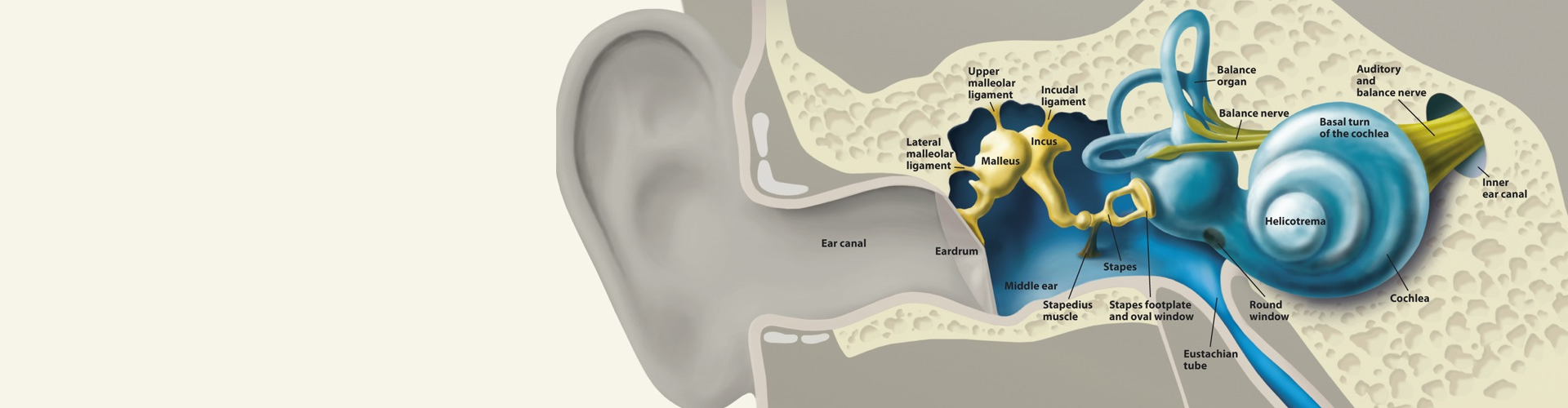
What is Sound? - Extra for Experts | Physics
Extra for Experts: Research and then write in you own words how do we hear sound? How do sound waves get from our ear to our brain?
What is Sound? | Physics
A. a) Define 2 different kinds of waves.
Transverse and Longitudinal
Transverse - extends across, eg. slinky, spring
Longitudinal - Going lengthwise, not across, eg. rope, car headlines
b) Define A, B, C. D, on the diagram
a. Crest
b. Wavelength
c. Amplitude
d. Trough
c) List types of waves.
B. a) Hearing sound
We can also describe sound in terms of the pitch or loudness
Monday, September 21, 2020
Inclusiveness “Tell Different Stories” | Wānanga
Last week, in Wānanga, we finished our worksheet on Inclusiveness "Tell Different Stories". We were given an article from Elif Shafak: ‘We need to tell different stories, to humanise the other’
Elif Shafak: ‘We need to tell different stories, to humanise the other’
History has shown that hate doesn’t start with concentration camps or civil war. It always starts with words.
The year 2020 hasn’t solely been defined by the pandemic, rising unemployment, deepening economic inequalities and a critical time for the climate emergency. There has also been an alarming increase in hate crimes across the world.
In Poland, LGBTQ communities have become enemy number one. In Hungary, neo-Nazi crowds organise demonstrations to expel the Roma communities. More than half of the hate crimes in New York last year targeted Jewish citizens. In Germany, there has been a dangerous increase in attacks against minorities and refugees. In the UK, Home Office figures indicate a surge in hate crimes, including those against sexual minorities and transgender citizens. In Turkey, Brazil and India, a dangerous form of dogmatism continues to brew. All these seemingly disparate events have one fundamental thing in common: a systematic hatred of and bias against people who are regarded as different; the dehumanisation of the “other”.
History has shown that it doesn’t start with concentration camps or mass murder, or civil war or genocide. It always starts with words: stereotypes, cliches, tropes. The fight against dehumanisation, therefore, also needs to start with words. Stories. It is easier to make sweeping generalisations about others if we know close to nothing about them; if they remain an abstraction. To move forward, we need to reverse the process: start by rehumanising those who have been dehumanised. And for that we need the art of storytelling.
Data and factual information are crucial, but not enough to bring down the walls of numbness and indifference, to help us empathise with people outside our tribes. We need emotional connections. But more than that, just as we need sisterhood against patriarchy, we need storyhood against bigotry. East or west, when we relate to others we do so through stories. Literature can be incredibly powerful, universally relevant and, most importantly, a healing force.
Under austerity, we have seen libraries shut, cultural centres neglected. Now, with the impact of coronavirus, the arts and culture are once again endangered. At a time when inequalities are deepening and prejudices escalating, we urgently need public and private support for creativity, especially among disadvantaged communities.
The art of storytelling is one of our last remaining democratic spaces. Now it must become one of our main acts of resistance against dehumanisation.
• Elif Shafak is a writer, academic and activist
Questions to answer after reading. Add your answers after each question below. Use full sentences with proper punctuation.
- What type of crime is increasing around the world?
- Hate crimes have been an alarming increase around the world.
- These crimes have one (fundamental) thing in common: a hatred or bias towards what?
- Others
- We learned in our Inclusiveness slides that it can be hurtful to judgments based on our differences to/with other people. Write the missing word.
- Many conflicts between people start with words? Write the missing word.
- To avoid dehumanising people that are different, the writer says we need to think about certain kinds of words. We know from our Inclusiveness slides that labels don’t tell us much about people. What is another kind of word that the writer says we should avoid?
- Stereotypes
- Why is storytelling and literature (and reading about others) so important? Write a paragraph about this in your own words as best as you can. (The writer discusses this in the second half of the article).
- To rehumanise them
- Select a book from our library about someone different than you; someone you normally would not read about from a different culture, for example.
- Identity, culture
Friday, September 18, 2020
Zealandia United | Power to the People
Today, in Power to the People (hurumanu 6), we had to create our own political party that we are soon going to vote for the prime minister of our kahui, Tīeke. First, we had to make our own parties. In that, we had to choose one person from each class to be in our group. There were five classes in our kahui, so we had to be in a group of five. After being in a group, we had to think of our political party name and a slogan. After that, we had to decide on 5 policies that our party will focus on and if I am the prime minister of Tīeke I will try to fix as much policies as I can. The five policies that we decided were;
- Environment
- Transportation
- Manufacturing
- Education
- Housing
Political Name: Zealandia United
Political Logo:

Political Slogan: It's Time for a Change
The Marketing Mix - Promotion
Today, in Business Studies, we are still continuing on the Marketing Mix and this is the last part of the Marketing Mix - Product, Price, Place, and Promotion. Promotion is the process of communicating with the target market and persuading them to buy what you are selling. This includes:
- TV adverts
- use of billboards
- social media activity
- influencers
- online video and banner adverts
- email advertisements
- sponsorship deals
- discounts and special offers
- branding
![]() |
| Credit: https://www.youtube.com/watch?v=ZBKWqdAS7nA |

The Marketing Mix - Place
- a retail store
- an online store or app
- directly from the manufacturer
![]() |
| Credit: https://www.youtube.com/watch?v=uZEa9RXRAzI |
Wednesday, September 16, 2020
Energy Transformation Experiment | Physics
- Light
- Heat
- Electricity
- Chemical
- Potential
- Kinetic
- Magnetic
- Sound
- Chemical + electrical = Phone
- Light + chemical = Flashlight, car,
- Kinetic + light = Comet
Aim: To make a marshmallow shooter that transforms energy
- Marshmallow
- Scissors
- Balloon
- Plastic Cup (we used styrofoam cup)
- Duct tape (optional)
Method:
- Take the scissors and cut the bottom off the cup.
- Take the balloon and cut the bottom off the very tip.
- After you cut that, you will take it and stretch it over the top of the cup where you cut the hole.
- Once it's on, you will tie a knot in the end where you normally blow air into the balloon.
- Optional: In order to secure the balloon, take a piece of duct tape and wrap it around securely. Taping the balloon to the cup will allow you to be able to pull the balloon as far back as you can without it snapping off.
- Take a handful of marshmallow (this will be your ammo) and you will be able to shoot at far distances.
- Take one marshmallow and place it in the very centre of the bottom of the cup.
- Have fun!
![]() |
| Credit: https://www.somewhatsimple.com/easy-marshmallow-shooters/ |
Tuesday, September 15, 2020
How to become an Elected Government Representative?

The Marketing Mix - Price | Business Studies
- competition
- customer opinions
- brand image
- availability
![]() |
| The Marketing Mix - Price Credit: https://www.youtube.com/watch?v=2tzd7XivFqk |
Our first question was about the price of the product and how did we work out the price for our product. Well, first, we took out a survey to the school about the milkshakes, which included a range of prices to choose. Most people chose the lowest price, but there were a few people who chose more than $2.50, which was well. Our group thought to choose a price which would be profitable and not too expensive. So, our group to sell our product for $3.00, which is a good price to purchase milkshakes (our product).
| Business | Quantity | Price |
| Shake Shed & Co | Small and Large | Small: $5.30 Large: $6.30 |
| Wendy's Supa Sundaes | Small and Large | Small: $4.50 Large: $5.50 |
Energy Transformation | Physics
"Energy can't be created nor destroyed, but only change from one form into another form."
Example of Energy Transformation
- Flashlight - Battery (Chemical) ➡️ Light
- Car - Battery (Chemical) ➡️ Kinetic, Light, Sound
- Phone - Power (Chemical) + Electricity ➡️ Light, Sound, Heat and Chemical Energy
- Laptop - Power Socket + Charger ➡️ Light, Sound, Heat, and Chemical Energy
- Radio - Power Socket + Charger ➡️ Sound
- Paper with spirals
- String
- Scissors
- Bunsen Burner
International Day of Democracy
International Day of Democracy is celebrated annually on 15 September. It was established on 8 November 2007 by the United Nations General Assembly, with the purpose of promoting and upholding the principles of democracy and consolidate democracy.
It encourages all Member Parliaments to mark the day with events and celebrations. Since its first observation in 2008, hundreds of parliamentary events have been held worldwide. It has included photo competitions, workshops for children, live televised debates, radio phone-ins and meetings with civil society organisations. International Day of Democracy is a UN observance day, but, however, not a public holiday.
The theme for 2020 is “Democracy under Strain: Solutions for a Changing World”. It is also coinciding with the 70th anniversary of the Universal Declaration of Human Rights, the day is also an opportunity to highlight values of freedom and respect human rights as essential elements of democracy.
Posters, flyers, are placed in public places, and places where people can learn more about how democracy works and is liked with factors, such as freedom of expression and tolerant culture. Organisations, such as the Inter-Parliament Union (IPU) organise activities such as public opinion surveys about democracy and political tolerance.
International Day of Democracy has other names in distinct languages:
English | International Day of Democracy |
Arabic | اليوم الدولي للديمقراطية |
German | Internationaler Tag der Demokratie |
Hebrew | היום הבינלאומי של דמוקרטיה |
Korean | 민주주의의 날 |
Spanish | Día Internacional de la Democracia |
References:
Monday, September 14, 2020
Conservation Week
| Credit: doc.govt.nz/globalassets/graphics/conservation-week/2020/doc-cw20-eventfinda-banner.jpg |
Conservation Week (Te Wiki Tiako Ao Tūroa) is an annual week in New Zealand organised by the Department of Conservation (DOC), which encourages everyone to see nature through new eyes, it also to promote the conservation of native plants and animals.
Conservation Week was originally launched in 1969 by the New Zealand Scout Association - it encourages Kiwis to work together to protect the beautiful wildlife and nature of Aotearoa. Their aim was to promote greater interest in the environment and encourage people to take practical actions to look after it.
The Department of Conservation took over the Conservation Week duties when it was formed in 1987, and since then, it has worked with other groups, businesses, councils and agencies to celebrate this special national event.
There are organised events and activities across the country that you can take part in with the family and friends to help the conservation efforts, from these events, you can learn how you can contribute towards conservation in your community and garden.
Conservation Week 2020 will be held from 15 August to 23 August. Since COVID-19 lockdown, people have started to view the world differently. Why not take part in Conservation Week to learn about the environment and how to look after it for future generations.
There are many ways you can get involved in Conservation Week, such as get out in the great outdoors, run a conservation activity at school, research environmental issues and take action, make your school a nicer place, etc.
If you want to set up an event for Conservation Week, take a step-by-step guide by the Department of Conservation.
You can look at the promo from the Department of Conservation.
References:
Sunday, September 13, 2020
Dwarf Planet Ceres is an ocean world
NASA's Dawn spacecraft shot by the dwarf planet Ceres two years ago. After conducting data analysis on the Occator crater, scientists now say Ceres is an ocean world with brine under the surface. These studies were published separately in Nature Astronomy and Geoscience. Ceres lies in the asteroid belt between Mars and Jupiter. Writing in a news release, NASA says the Dawn mission passed the dwarf planet, and from a distance of about 35 kilometres away, the orbiter took crisp images of Ceres' strangely bright areas and made gravity measurements. From the data, Dawn scientists from the California Institute of Technology determined there is a brine reservoir under the crater's surface, about 40 kilometres deep and hundreds of kilometres wide. The brine consists of sodium chloride bounded with water and ammonium chloride, and the salty liquid is apparently rising to the surface. These compounds are organic chemicals, and the brine also reflects light, which explains the crater's bright areas. Researchers say a meteor impact formed the crater millions of years ago and created fissures that reached the reservoir deep in Ceres' structure. This allows the salty liquids to move up to the surface.
Earth may temporarily pass dangerous 1.5 C warming limit by 2024, major new report says
The Paris climate agreement seeks to limit global warming to 1.5℃ this century. A new report by the World Meteorological Organization warns this limit may be exceeded by 2024—and the risk is growing.
This first overshoot beyond 1.5℃ would be temporary, likely aided by a major climate anomaly such as an El Niño weather pattern. However, it casts new doubt on whether Earth's climate can be permanently stabilized at 1.5℃ warming.
This finding is among those just published in a report titled United in Science. We contributed to the report, which was prepared by six leading science agencies, including the Global Carbon Project.
The report also found while greenhouse gas emissions declined slightly in 2020 due to the COVID-19 pandemic, they remained very high—which meant atmospheric carbon dioxide concentrations have continued to rise.
![]() |
| David Unwin/Stuff The world may exceed the 1.5℃ warming threshold sooner than we expected. Credit: https://www.stuff.co.nz/environment/climate-news/122721475/earth-may-temporarily-pass-dangerous-15c-warming-limit-by-2024-major-new-report-says |
Greenhouse gasses rise as CO₂ emissions slow
Concentrations of the three main greenhouse gases – carbon dioxide (CO₂), methane (CH₄) and nitrous oxide (N₂O), have all increased over the past decade. Current concentrations in the atmosphere are, respectively, 147%, 259% and 123% of those present before the industrial era began in 1750.
Concentrations measured at Hawaii’s Mauna Loa Observatory and at Australia’s Cape Grim station in Tasmania show concentrations continued to increase in 2019 and 2020. In particular, CO₂ concentrations reached 414.38 and 410.04 parts per million in July this year, respectively, at each station.
Growth in CO₂ emissions from fossil fuel use slowed to around 1% per year in the past decade, down from 3% during the 2000s. An unprecedented decline is expected in 2020, due to the Covid-19 economic slowdown. Daily CO₂ fossil fuel emissions declined by 17% in early April at the peak of global confinement policies, compared with the previous year. But by early June they had recovered to a 5% decline.
We estimate a decline for 2020 of about 4-7% compared to 2019 levels, depending on how the pandemic plays out.
Although emissions will fall slightly, atmospheric CO₂ concentrations will still reach another record high this year. This is because we’re still adding large amounts of CO₂ to the atmosphere.
![]() |
| Global daily fossil CO₂ emissions to June 2020. Credit: Le Quéré et al. 2020, Nature Climate Change, Global Carbon Project Credit: https://phys.org/news/2020-09-earth-temporarily-dangerous-limit-major.html |
Warmest five years on record
The global average surface temperature from 2016 to 2020 will be among the warmest of any equivalent period on record, and about 0.24C warmer than the previous five years.
This five-year period is on the way to creating a new temperature record across much of the world, including Australia, southern Africa, much of Europe, the Middle East and northern Asia, areas of South America and parts of the United States.
Sea levels rose by 3.2 millimetres per year on average over the past 27 years. The growth is accelerating – sea level rose 4.8 millimetres annually over the past five years, compared to 4.1 millimetres annually for the five years before that.
The past five years have also seen many extreme events. These include record-breaking heatwaves in Europe, Cyclone Idai in Mozambique, major bushfires in Australia and elsewhere, prolonged drought in southern Africa and three North Atlantic hurricanes in 2017.
![]() |
| Left: Global average temperature anomalies (relative to pre-industrial) from 1854 to 2020 for five data sets. UK-MetOffice. Right: Average sea level for the period from 1993 to July 16, 2020. Credit: European Space Agency and Copernicus Marine Service Credit: https://phys.org/news/2020-09-earth-temporarily-dangerous-limit-major.html |
1 in 4 chance of exceeding 1.5°C warming
Our report predicts a continuing warming trend. There is a high probability that, everywhere on the planet, average temperatures in the next five years will be above the 1981-2010 average. Arctic warming is expected to be more than twice that the global average.
There's a one-in-four chance the global annual average temperature will exceed 1.5℃ above pre-industrial levels for at least one year over the next five years. The chance is relatively small, but still significant and growing. If a major climate anomaly, such as a strong El Niño, occurs in that period, the 1.5℃ threshold is more likely to be crossed. El Niño events generally bring warmer global temperatures.
Under the Paris Agreement, crossing the 1.5℃ threshold is measured over a 30-year average, not just one year. But every year above 1.5℃ warming would take us closer to exceeding the limit.
Arctic Ocean sea-ice disappearing
Satellite records between 1979 and 2019 show sea ice in the Arctic summer declined at about 13% per decade, and this year reached its lowest July levels on record.
In Antarctica, summer sea ice reached its lowest and second-lowest extent in 2017 and 2018, respectively, and 2018 was also the second-lowest winter extent.
Most simulations show that by 2050, the Arctic Ocean will practically be free of sea ice for the first time. The fate of Antarctic sea ice is less certain.
![]() |
| Global average model prediction of near-surface air temperature relative to 1981–2010. Black line = observations, green = modelled, blue = forecast. Probability of global temperature exceeding 1.5℃ for a single month or year shown in brown insert and right axis. Credit: UK Met Office Credit: https://phys.org/news/2020-09-earth-temporarily-dangerous-limit-major.html |
![]() |
| Don Landwehrle/123RF Summer sea ice in the Arctic is expected to virtually disappear by 2050. Credit: https://www.stuff.co.nz/environment/climate-news/122721475/earth-may-temporarily-pass-dangerous-15c-warming-limit-by-2024-major-new-report-says |
Urgent action can change trends
Human activities emitted 42 billion tons of CO₂ in 2019 alone. Under the Paris Agreement, nations committed to reducing emissions by 2030.
But our report shows a shortfall of about 15 billion tons of CO₂ between these commitments, and pathways consistent with limiting warming to well below 2℃ (the less ambitious end of the Paris target). The gap increases to 32 billion tons for the more ambitious 1.5℃ goal.
Our report models a range of climate outcomes based on various socioeconomic and policy scenarios. It shows if emission reductions are large and sustained, we can still meet the Paris goals and avoid the most severe damage to the natural world, the economy and people. But worryingly, we also have time to make it far worse.
Pep Canadell is Chief research scientist, Climate Science Centre, CSIRO Oceans and Atmosphere; and Executive Director, Global Carbon Project, CSIRO and Rob Jackson is Chair, Department of Earth System Science, and Chair of the Global Carbon Project, Stanford University
This article is republished from The Conversation under a Creative Commons licence. Read the original article.
References:
World First Aid Day
![]() |
| World First Aid Day Credit: https://www.aviancetechnologies.com/world-first-aid-day-2020-theme-history-and-importance-of-first-aid/ |
World First Aid Day is celebrated on September 12 and 13. It is an annual campaign that promotes the importance of first aid training to prevent injuries and save lives. Since 2000, World First Aid Day has been organized by the Red Cross and Red Crescent Societies. Together, they bring awareness to the public on how first aid kits can save people, in everyday and emergency situations.
In everyday situations, first aid can be as helpful as accidentally cutting oneself with a kitchen knife, or injuring oneself by falling down a ladder. But, in an emergency situation, providing medical care to people in war-torn countries or in areas affected by natural disasters, like tsunamis and earthquakes.
Wherever you are in the world, a first aid kit is a must for everyone. It makes an important global event, in its name, World First Aid Day.
Saving lives has always been important, but first aid is believed to have started only 160 years ago. At the Battle of Solferino in northern Italy, Henry Dunant, a young businessman from Geneva, witnessed a tragic tragedy. About 40,000 dead men surrounded him and many were wounded need medical assistance. In response, Henry called for help and had an idea of the Red Cross. Today, it is known as the International Federation of Red Cross. Along with the Red Cresent Societies, they are the largest humanitarian network in the world.
References:
Saturday, September 12, 2020
Resources Versus Killer Diseases
EXAMPLES OF MODERN EPIDEMICS:
| Credit: https://www.technologynetworks.com/immunology/articles/epidemic-vs-pandemic-323471 |
Aids (Acquired Immune Deficiency Syndrome)
- first reported in US in 1981 and now a major worldwide epidemic
- caused by the human immunodeficiency virus (HIV)
- by killing or harming cells of the immune system, HIV destroys the body's
- ability to fight infections and certain cancers so victims are in danger from life-threatening diseases called opportunistic infections, which are caused by microbes that usually do not cause illness in healthy people
- illnesses show as symptoms such as fever, fatigue, night sweats, loss of appetite, swollen lymph glands, weight loss, yeast infection, diarrhoea, dry mouth, rashes, headache, dry cough, memory and movement problems
- although there is no cure, some drugs slow the pace of infection
- HIV is spread by direct contact with infected body fluids, including blood,
- semen, vaginal secretion and breast milk; this means HIV in one of these fluids must get into the bloodstream by direct entry into a vein, a break in the skin or through mucous linings (other body fluids such as urine, saliva, vomit do not pose a risk unless visible bļood is present; nor do mosquito bites)
- HIV is not easily transmissible (not transmitted through sneezing, coughing, eating or drinking from common utensils or being around a person with HIV; not transmitted through air, water, food or casual contact such as shaking hands, hugging, or use of restrooms and drinking fountains)
- no country is unaffected by Aids but getting help if you have Aids differs from country to country e.g. many victims in Africa are too poor to get drugs, lack education to know much about the disease, and have governments who are often slow to act (some leaders refused to accept that HIV was linked to Aids).
![]() |
| AIDS Credit: https://medium.com/@info.hospitto/acquired-immune-deficiency-syndrome-63a761659f72 |
- does not usually make wild birds sick, but can kill domesticated birds
- normally does not infect humans; however, infections and outbreaks in humans have been reported since 1997 such as outbreaks in Hong Kong and the Netherlands which killed both chickens and humans
- millions of chickens have been slaughtered during outbreaks to remove the source of the virus
- spreads mainly from birds to humans, though there is rare person-to-person infection
- symptoms in humans range from typical flu-like symptoms (e.g., fever, cough, sore throat, muscle aches) to eye infections, pneumonia, acute respiratory distress, viral pneumonia
- no specific treatment; scientists continue to search for vaccines
- because it does not commonly infect humans, there is little or no immune protection in humans so if an avian virus were able to infect people and gain the ability to spread
- easily from person to person, a pandemic could begin.
![]() |
| ©GettyImages/Merrimon Credit: https://www.foodnavigator.com/Article/2020/02/11/Bird-flu-in-Germany-unlikely-to-be-transmitted-via-infected-eggs-and-sausages |
- one of the most deadly viral diseases known (kills 50-90% of all cases)
- named for river in Zaire, Africa, where it was first seen, in 1976
- since then there have been many outbreaks of it in Africa and the virus was found in monkeys in quarantine labs in the US.
- incubation is 2 to 21 days after infection
- symptoms are high fever, weakness, chills, headaches, pains, sore throat, loss of appetite, vomiting, hiccups, red and itchy eyes, diarrhea, rash, failure of blood to clot; bleeding (from eyes, lips, ears, nose, gums, skin)
- spreads through sexual contact, or hypodermic needles being reused on patients
- no specific treatment or vaccine.
![]() |
| © The World Health Organization/Junior D. Kannah Credit: https://thehill.com/policy/healthcare/513106-new-ebola-outbreak-in-congo-raises-alarm |
- viral respiratory illness first reported in Asia in 2003 from where it spread to more than two dozen countries before it was contained (hundreds died)
- symptoms include high fever, headache, overall feeling of discomfort, body aches, diarrhea, dry cough, pneumonia
- spread by close person-to-person contact e.g. when an infected person coughs or sneezes, or when a person touches something contaminated with infectious droplets and then touches his or her mouth, nose, or eye(s)
- incubation period is 2 to 14 days
- treatment is quarantine; scientists continue to search for vaccines.
![]() |
| Christian Keenan/Getty Images Credit: https://www.history.com/news/sars-outbreak-china-lessons |
The Great Flu Epidemic In New Zealand
The influenza epidemic of 1918 was the worst pandemic since the Black Death of 1347. It killed more than 21 million people around the world. About 9 million people had been killed in the First World War of 1914-18.
Nobody knows the exact figure for how many people in New Zealand the influenza killed. Estimates range from 6,500 to 8,500. The whole population of New Zealand at that time was not much more than 500,000.
People called it the Plague of the Spanish Lady because of the damage it did in Spain. Or Black Flu because the victims sometimes turned black after they had died. This made people think of the Black Death.
It began in Europe in April 1918. It spread rapidly and then went to Asia and the United States and then to Australasia. It hit New Zealand when people were getting ready to put their lives back to normal after the war.
![]() |
| Medicines for the 'Black Flu' were available through depots set up by the government; Christchurch 1918. Credit: https://thespinoff.co.nz/atea/18-03-2020/ |
More Dead From Flu
Thirteen deaths from influenza occurred in Auckland yesterday. Twelve more Auckland Hospital nurses and two more junior medical officers have been stricken with the complaint.
A large number of applications for admission were received at the hospital but the majority had to be refused owing to lack of accommodation.
A notice issued by the acting chief health officer, Dr J. P. Frengley, requires the immediate closing of all schools, theatres, public halls, billiard rooms, shooting galleries and other places of entertainment. This will include the Auckland Racing Club's course and buildings at Ellerslie and means that no races can be held on Saturday. Over 300 persons submitted themselves to treatment at the precautionary steam spray inhalation chamber at the Public Health Department.
NZ Herald November 5 1918.
Friday, September 11, 2020
The Marketing Mix - Product | Business Studies
![]() |
| The Marketing Mix Credit: https://www.klood.com/blog/inbound/do-you-remember-the-marketing-mix |
Thursday, September 10, 2020
Plague in India
The plague has hit India hard. In the pandemic of the 1890s, more than 1 million people in India died. In outbreaks between 1949 and 1959, 59,000 people died. Then in 1994 plague struck India again.
First, it was the bubonic plague in the Beed district of India which is 300 km southeast of Bombay. Health authorities gave out Tetracycline capsules. They sprayed with insecticides. Tribesmen were brought in to catch rats.
Then pneumonic plague broke out in the city of Surat. It is 250 km north of Bombay. Two million people live in this polluted industrial city. There is little sanitation. A lot of people sleep in the streets. Garbage piles up. Recent floods had left a lot of animal carcasses about.
Thousands of plague cases were reported in Surat. The death toll started to climb. Shops, offices, schools and cinemas closed. People wrapped scarves around their heads to protect themselves. Hundreds of thousands of people fled from the city. Some were private doctors and nurses and other health aides. A lot of them headed for Bombay,
The plague spread to other places. Neighbouring countries began to close their land borders and stop air connections. Other countries posted medical watches at airports. Eventually, the plague tailed off.