Pages

Showing posts with label Chemicals and Chaos. Show all posts

Monday, August 24, 2020

The Plague Doctor | Chemicals and Chaos

Welcome to another post. Today, in Social Studies, I completed a creative writing activity for the Plague Doctor in the Black Death.


One would imagine an image of the Plague Doctor when the Black Death is named. The Plague doctor's suit costume contained a cloak, tucked under the masculine neck and stretched to the floor to hide as much of the body as possible. Doctors often spread all clothing with fat or wax, believing that this reduces the chance of infection from sick victims. Wax served protection against the disease by airborne droplets, as well as fleas, the main visitors of the disease.

At that time, it seemed to many that the plague spread, because of spoiled air. Doctors assumed that a mask in the form of a bird would repel the infection from the sick person and bring it to the doctor's clothes and considered that the eye mask of red glass made the doctor free from the disease.

The beak of the mask was filled with fragrant medicinal herbs to protect it from miasma and from the stinky smell, which also could carry the plague.

They carried a cane for examining patients without touching them, as well as for self-defence, against the jaded. Also, on the neck were a casket for aromatic herbs and substances that were supposed to scare off the plague.

Plague Doctors used a scalpel for opening the buboes and wore leather gloves to protect themselves. In those days, a wide hat identified someone as a doctor.

Tuesday, August 18, 2020

The Imploding Can | Chemicals and Chaos

Welcome to another post on my blog. Yesterday, in Chemistry, we had done the Imploding Can experiment. We first learnt about Expansion and Contraction;

Expansion

Applying heat, causes particles to spread out


Contraction

Contraction makes the particles to cool down, causes the space to be denser.


Next, we had to do the experiment, 'The Imploding Can' experiment.


Aim: To observe contraction in gases

Hypothesis: I think the water is going to cool down because the boiling water will go to a container of water which is cooler than the boiling water.

Equipment:

  1. Aluminum Can
  2. Scissor Tongs
  3. Element
  4. Heatproof Mat (just in case)
  5. Beaker
  6. Container of water


Method:


  1. Set up an Element.
  2. Pour 60ml of water into your empty can. It should be no more than ¼ full. 
  3. Heat the can of water until steam comes up.
  4. Carefully, grip the can with scissor tongs. Make sure you have firm hold of the can before lifting it off the element.
  5. Quickly, but carefully, tip the can as you plunge it into a container of water. 

Results:

The aluminium can imploded when it went into the container of water.

Discussion:

The purpose of it imploding is because the boiling water suddenly became cool which caused it to contract.


Hazard: Boiling Water       &        Wear Safety Glasses

Monday, August 17, 2020

How the Black Death Transmitted to Humans | Chemicals and Chaos

Welcome to another post. Today, in Chemicals and Chaos, we had to write a Basic Body paragraph for how the rats transmitted the plague to humans.

Fleas and rats spread the Black Death. Firstly, the rat had the plague, next, the flea drinks the rat’s blood and gets the disease. Thirdly, the flea sits on a person and bites the person’s body, in that process, the flea vomits, puking the disease to the person. This shows how easily the Black Death could spread throughout Europe. Once the humans caught the plague, they showed a series of symptoms.

How the Black Death Was Transmitted | Chemicals and Chaos

Welcome to another post on my blog. Today, I finished an activity for Hurumanu 3 (Chemicals and Chaos) about the Black Death. We learnt how the rats transmitted the Black Death to a human.


Thursday, August 13, 2020

The Rat and Flea Combination

To start with, the Black Death had no name. People called it the ‘Pestilence' or the, 'Great Mortality,' It has three forms –

BUBONIC PLAGUE. (Most common type.) Large lymph nodes or buboes (black swellings about the size of an egg or an apple) erupt in the armpits and groin oozing blood and pus. Boils cover the body and black blotches appear on the skin from all the internal bleeding. There is sudden fever, restlessness, confusion and severe pain. Death within five days.

PNEUMONIC PLAGUE. The infection spreads to lungs causing pneumonia. Coughing expels millions of contagious bacteria. Sharp chest pains. Continuous fever. Heavy sweating. Spitting up of blood. Death within three days or less.

SEPTICAEMIC PLAGUE. Infection in the bloodstream. Least common form of disease. Most fatal. Sudden severe illness. Chills, fever, headache, nausea, vomiting, delirium. No time for other symptoms to develop. Death within a few hours to two days. This is how people at the time described the plague. Such descriptions are called contemporary accounts. "The victims died almost immediately. They would swell beneath their armpits and in their groins and fall over dead while talking.” Before the end "death is seen seated on the face." It seemed as if one sick person "could infect the whole world.” “Woe is me of the shilling on the armpit! It is seething, terrible ... a head that gives pain and causes a loud cry... a painful angry knob... Great is it seething like a burning cinder.”

Modern people know that infectious diseases:
• are caused by organisms such as bacteria and viruses from outside invading
the body
• can be passed from one person to another
• usually raise the temperature of the victim or cause a fever.

Plague can be cured today because scientists have found out the bacteria that causes plague is carried by rats and the fleas that live on rats. The flea finds a rat to be its host. It bites the rat and infects the blood of the rat. When the flea or rat bites a human, it passes the disease on. When the human comes into contact with other humans, it passes the disease on.
But nobody in the Middle Ages knew this. People who wrote about the plague never mentioned fleas. They only mentioned rats in passing. Yet fleas and rats were common pests.
The plague bacillus was not discovered for another 500 years.

How did the Black Death went from Asia to Europe? | Chemicals and Chaos

Welcome to another post on my blog. Today, in Social Studies, I completed a task for the Black Death. We had to create a cartoon strip about how the Black Death came to Europe. We had to make our cartoon strip either on paper or online, I chose to do it online, here is my work.


Monday, August 10, 2020

Conduction Stop Motion | Chemicals and Chaos

Welcome to another post on my blog. Today, in Chemistry, I finished a stop motion which we had to create either from Conduction or Convection, I chose Conduction. This stop motion took around an hour to complete, I hope you like it.


Thursday, August 6, 2020

Bench Toilets in the Medieval Times | Chemicals and Chaos

Welcome to another post on my blog. Today, in Social Studies, we looked at how the Black Death spread. We had to create a poster about one of the crazy Medieval Times on Hygiene, we had to choose one of 11 hygiene problems in the Medieval Times. The task was to create a poster from Canva or on paper. I chose 


Life in the Middle Ages | Chemicals and Chaos

Welcome to another post on my blog. Today, in Social Studies, we learnt how to write a Slam Dunk paragraph about the Middle Ages. We had to first start with a question, then write a paragraph about that question.

What was life like in the Middle Ages?

Interestingly, it depends if you were rich or poor; life was amazing for the riches and horrible for peasants. Life was dirty for the peasants, poo, rats and rubbish was all round the place even for the rich who lived in the castles. This is important because it is one of the reasons why the Black Death spread through Europe. Life was extremely hard to live in.

Monday, August 3, 2020

Teabag Rocket Experiment | Chemicals and Chaos

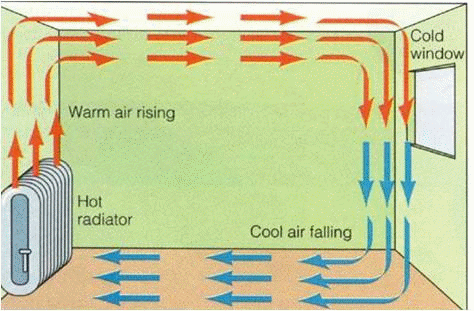
Welcome to another post on my blog. Today, in Chemistry, we had done a 'Teabag Rocket Experiment' using a teabag. We first learnt about convection, it's meaning and how it moves around.


Convection
Convection
Credit: https://www.simply.science/images/content/physics/

As heated particles expand and move faster they also rise up. As particles get cooler, particles sink because they are denser (particles get more closer). The process continues eventually the whole liquid would get heated up. The movement is called Convection Currents. This can also be seen in the air.


Aim: To observe convection in real life


Equipment:


  1. Heatproof Mat
  2. Teabag
  3. Scissors
  4. Lighter/Matchsticks

Method:

  1. Get a heatproof mat and place it on a table.
  2. Using scissors, cut the top part of the teabag and tip the tea out in the rubbish bin.
  3. Make the heatproof mat into a rectangle standing up.
  4. Using a lighter or matchsticks light the top part of the teabag.
  5. Observe the teabag fly up on the ceiling.

Observations:

When the teabag is lit it gets enough energy that it goes up till the ceiling. When it reaches the ceiling, it becomes less dense and becomes lighter. When the teabag goes down, it slowly goes down and turns into small particles if touched.

Thursday, July 30, 2020

How the Society Was Organised?

The Black Death: Key Facts About The Bubonic Plague That Ravaged ...
Clothes burned by the Black Death are burned in the Medieval Europe c. 1347 (Photo by Hulton Archive/Getty Images)
Credit: 
https://www.historyextra.com/period/medieval/black-death-plague-epidemic-facts-what-caused-rats-fleas-how-many-died/

This is you in 1347 Europe:


You live in a village outside a town. As a peasant, you belong to the group in society that works on the land. Ninety percent of the population are peasants. Another group are the nobles. Their job is to defend people. A third group is the clergy. Their job is to pray and care for Christians.
You have never travelled far, not even to the next village which is 8 km away. Your social life revolves around your own village and market days in town. You speak in a language and accent that only people from your own area can understand.

The world consists of Europe and fringes of Asia. You have never heard of such a place as New Zealand. Or America. For a long time, the Church has taught that the Earth is flat. Although some educated people are starting to say that the Earth is round, you still think that if you sailed far enough, you would come to the edge of the world and fall into a bottomless pit.

There is no education for you. A school was started in town once but the teacher was ignorant and used a birch all day to keep order. So you can not read or write. The only books available anyway are those the monks in the nearby abbey have copied by hand. Some of these books are illuminated with brightly coloured drawings. Drawings and wood-cuts have a little perspective. This means, for example, that the people in them might be bigger than the buildings and ships they are standing beside.

The houses in town are crammed together in narrow streets. Many families keep animals. The town has walls around it. At night the gates are locked and guarded. Wealthy town houses have servants, and apprentices who sleep in them. People collect their water from wells or the river. Messengers carry letters and town criers shout out the latest news. At least once a week the town has a market. Your family can rent a stall and sell any spare produce.

The Lord owns the land on which your family works. There are almost a hundred servants living in the lord's castle. The family dresses in silks and has banquets. Even the females ride horses and hunt with falcons. One of the daughters had a marriage arranged for her when she was a child. She had been widowed two times by the time she was thirteen.

You live in a hovel. It is a single storey wooden house with two rooms. It has a thatch roof. Straw covers the floor. You eat porridge for breakfast, bread with maybe a bit of cheese for lunch and pottage for dinner. Your mother cooks over an open fire. She makes your bread at home and bakes it in the oven owned by the lord. You wear simple homespun clothes of linen and wool and a hood like a cowl. There are no fences or hedges on the land. The open fields are divided into strips. Each family is allowed a certain number of strips in different fields. This way every family gets strips of land in the good and bad areas and shares the jobs.

You call yourself a Christian. You think that non-Christians are infidels and Jews especially should be persecuted. The Pope is your spiritual leader. He lives in Avignon in France. Your village has its own church. The priest can make you go to church. If you refuse, the priest can get a special church court to punish you. The priest collects a tithe from your family. This is a tenth of everything that you produce from the land in one year.

The nearby cathedral and abbey have collections of relics. They are clothes and bones thought to have belonged to saints. Many people say these relics can work miracles. You plan one day to visit these shrines and believe that God will reward you for doing this.
You will be lucky to live past your thirties. Many children die at birth. You hardly ever have a bath. You sleep in the same room as the rest of the family. There is a communal family bed for most members of your family. You have no idea why you get sick. You are frightened of lepers even though they are not allowed to go into inns or bake-houses and are not allowed to wash in streams or walk on narrow footpaths. Every time you hear a bell or a clacker warning you that a leper is approaching, you run away and hide. Last year the city of London passed a law that said lepers are not allowed to go into London. You think this is a good idea.

Conditions all around you are unsanitary. Filth and rubbish are often left in the streets of the town. There are open street sewers. The public latrines have a bad smell. The castle and wealthy town houses have privies that jut out from an outside wall. There is a hole in the bottom which lets waste fall into the river or the ditch. Some town houses have cesspools in the backyard. The cesspools always smell bad and some of them seep into the wells and the river where you get your drinking water. Household urinals drain into street sewers. A law says privies cannot do this but it is often ignored. The abbey's latrine is in a separate building.
Last time you went to town, a baker who had sold underweight bread was in the stocks and a fishmonger who had been selling bad fish was in the pillory. You threw mud and rotten apples at them. A man who had been found drunk was having to walk through the streets wearing a barrel. But the best sight is when a nagging woman or ‘scold' is put in the ducking stool and ducked in the village pond. There is an outlaw living in the forest nearby. If he goes into a church he will find sanctuary and his enemies will not be able to touch him. But eventually, his hunger and thirst will drive him out.

Monday, July 27, 2020

Diffusion Experiment | Chemicals and Chaos

Welcome to another post on my blog. Today in Chemistry, we learnt about the Particle Theory and Diffusion. We had done an experiment about diffusion.

Diffusion is when particles move from high to low concentration. Particles of matter always move. When matter heats up, energy rises and particles move faster. If the matter is cooled, energy is lowered and particles move slower.


Aim: see if hot/cold diffuses faster

Hypothesis: the powder is going to spread in the hot water


Equipment:

  1. Petri dish
  2. Water
  3. Tweezers
  4. Powder of potassium permanganate

Method:
  1. Half fill your petri dish with cold tap water.
  2. Place the petri dish on your work bench and allow the water to become settled.
  3. Using the tweezers, place a single powder of potassium permanganate in the centre of the petri dish.
  4. Observe for 5 minutes.
  5. Repeat the experiment using hot water.

Result:

In cold water: the potassium permanganate powder stays where it was, it did not spread.

In hot water:  the potassium permanganate powder spread when the powder went in.

Discussion:

My hypothesis was correct and my experiment worked out. The potassium permanganate moved faster in hot water because it increases energy and it moved faster. The cold one moved slower because they are not together but slightly apart so they moved slower.

Thursday, July 23, 2020

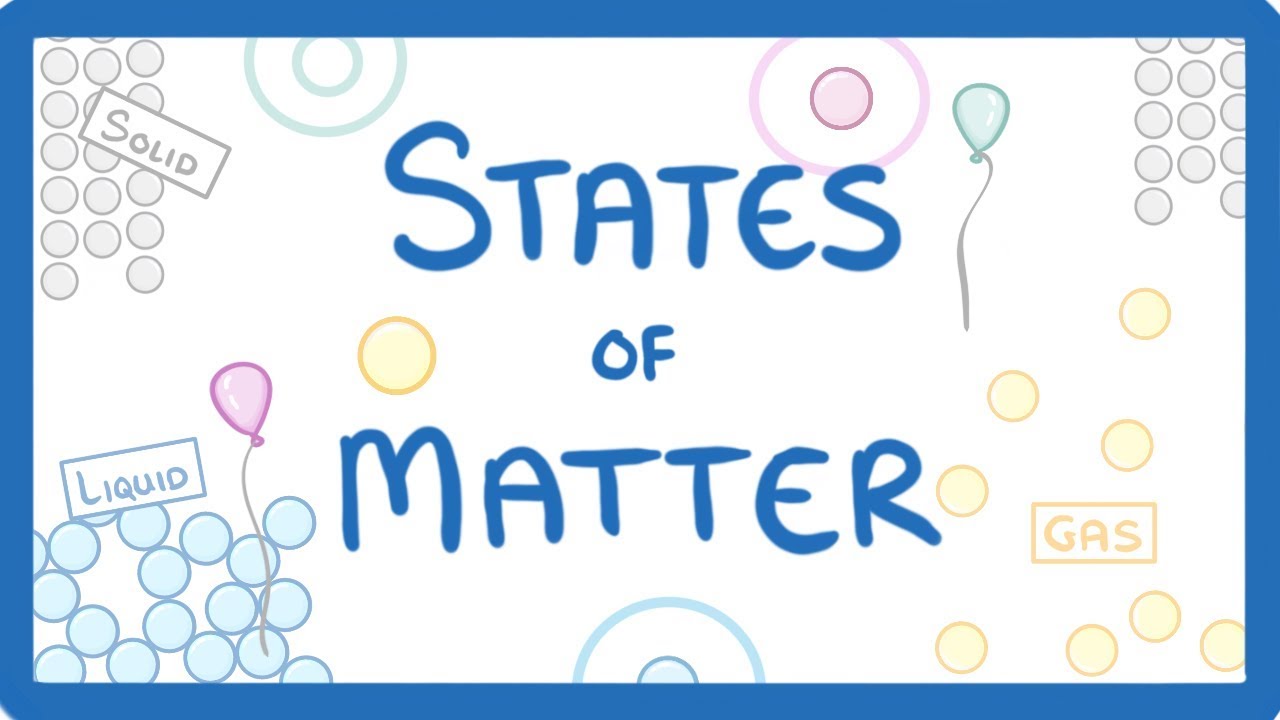
What's the Matter?

GCSE Chemistry - States of Matter & Changing State #20 - YouTube
States of Matter | Youtube
https://www.youtube.com/watch?v=hkBrw2fG75U

Welcome to another post on my blog. Today in Chemistry, we had moved from Mixing and Separating to Matter. Matter is anything that takes up space by having volume. We had learnt information about matter and their states. After learning, we had to make a DLO (Digital Learning Object), explaining what we had learnt today.

Monday, July 20, 2020

How was life in the Medieval Times?

Welcome to another post on my blog. For 'The Black Death', in Chemicals and Chaos, we move on from the Introduction to the Medieval Times. The activity was to create a pyramid showing people in the Medieval Times.


Thursday, July 2, 2020

Where the Black Death fits in History | Chemicals and Chaos

Welcome to another post on my blog. After completing independent tasks in Chemicals and Chaos, we move on to the new topic, 'Black Death'. I got a textbook about 'Epidemics Through Time', where we had to do each chapter and each activity. The first chapter was 'Rap on with History', we had to read a timeline which had all main events including the 'Black Death'.

After we had to choose ten events from the timeline, including the Black Death, and we had to make our own mini timeline, and colour code the events;


  • Red - exploration and travel
  • Blue - loss of life
  • Green - religion
  • Yellow - fighting
  • Orange - political

Here is my timeline.


Facts of the 10 Events

  1. 100 Years' War - It's really not a hundred-year war, it's really 116 years; it would be a '116 Years' War
  2. Black Death (Europe) - It had an estimate to have killed 30% to 60% of Europe's population.
  3. Captain Cook arrives in New Zealand - He arrived in Zealand on 6 October 1769 and landed at Poverty Bay two days later.
  4. Battle of Waterloo - It was fought near Waterloo in Belgium, part of the United Kingdom and the Netherlands at that time.
  5. Treaty of Waitangi - It was first signed on 6 February 1840 and it was located in Waitangi.
  6. American Civil War - It was a civil war in the United States from 1861-1865. The first battle was the Battle of Fort Sumter and the final battle was the Battle of Palmito Ranch.
  7. Influenza Epidemic - The Spanish Flu was an epidemic from February 1918 to April 1920. I infected 500 million people, around a third of the world's population, in four successive waves.
  8. World War I - It was a war from 1914-1918; it started after the assassination of Austrian archduke Franz Ferdinand by South Slav nationalist Gavrilo Princip on 28 June 1918.
  9. World War II - It was a war from 1935-1945. The majority of the world's countries, including the great powers, formed to two opposing military alliances, the Allies and the Axis.
  10. First Person on the Moon - Neil Armstrong was the first person on the moon on 20 July 1969 after landing the Apollo 11.


Why are we studying this?

Chemicals and Chaos is a hurumanu including Chemistry (Chemicals) and Social Studies (Chaos); Chaos is about chaotic events around the world both in the past and present. Currently, we are learning about the Black Death. I think that we are studying the Black Death because it is one of the most devastating pandemics in human history.

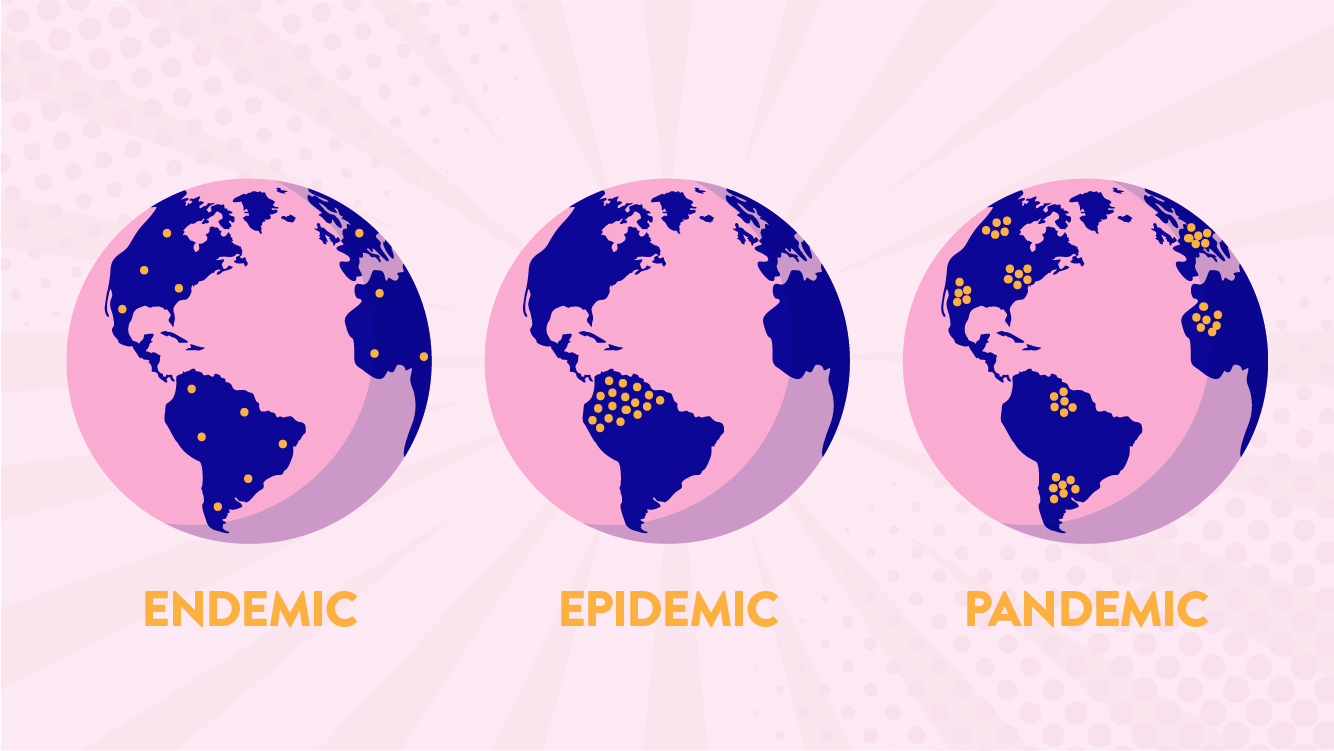
Difference between a Pandemic and Epidemic?

Welcome to another post on my blog. Today, in Chemicals and Chaos, I move on from independent tasks to the 'Black Death'. We had an introduction explaining some keywords relating to the 'Black Death'; Epidemic, Plague and Outbreak.

After that, we were given a question to answer, 'What is the difference between a Pandemic and an Epidemic?'

A pandemic is a disease which is spread all over the world, such as the COVID-19 pandemic. Whereas an epidemic is a disease which is spread in a community, area or a country, such as the West African Ebola virus epidemic in 2013-2016.
Epidemic vs Pandemic | Technology Networks
Credit: https://www.technologynetworks.com/immunology/articles/epidemic-vs-pandemic-323471

Tuesday, June 30, 2020

Rap on with History Timeline | Chemicals and Chaos

Welcome to another post on my blog. After completing independent tasks in Chemicals and Chaos, we move on to the new topic, 'Black Death'. I got a textbook about 'Epidemics Though Time', where we had to do each chapter and each activity. The first chapter was 'Rap on with History', we had to read a timeline which had all main events including the 'Black Death'.

After, we had to choose ten events from the timeline, including the Black Death, and we had to make our own mini timeline, and colour code the events;


  • Red - exploration and travel
  • Blue - loss of life
  • Green - religion
  • Yellow - fighting
  • Orange - political

Here is my timeline.


Monday, June 29, 2020

Mount Vesuvius | Chemicals and Chaos

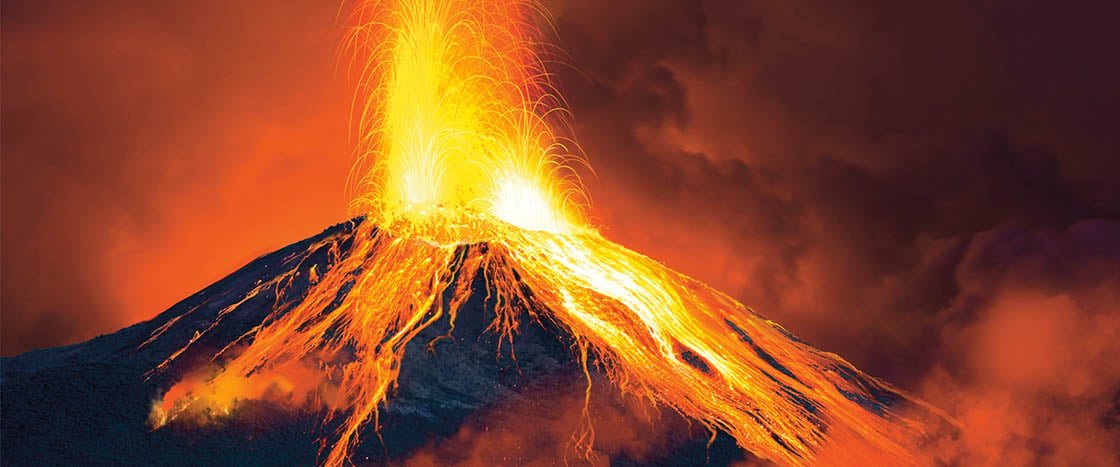
Welcome to another post on my blog. In today's post, I am sharing another independent activity that I completed in Chemicals and Chaos. This activity that I had chosen was about the famous eruption of Mount Vesuvius in the year 79 AD. The disaster in Pompeii had killed more than two thousand and left the city abandoned for many years. We had to create a newspaper article about the eruption.

Newspaper Article, click here

The Eruption of Mt. Vesuvius
The Eruption of Mt Vesuvius
Credit: https://storyworks.scholastic.com/issues/2019-20/120119/the-eruption-of-mt-vesuvius.html


Thursday, June 25, 2020

Tsunami | Chemicals and Chaos

Welcome to another post on my blog. Today, I finished a class task for Chemicals and Chaos. The class task was about Tsunamis. We first watched a movie about Tsunami's and then was given an activity to do.

World’s tallest tsunami was chaotic. It was in Alaska in 1958. It was 530 meters high.


Task: Create a picto (picture) graph that shows how tall this Tsunami was compared to famous landmarks. 


Te Whiti-o-Rongomai and Tohu Kākahi | Chemicals and Chaos

The invasion of Parihaka – Taranaki region – Te Ara Encyclopedia ...
Parihaka Invasion
Credit: https://teara.govt.nz/
Welcome to another post on my blog. Today, I finished another independent task for Chemicals and Chaos. The task was about Parihaka, a war which occurred on 5 November 1881. I had to create a poster on Te Whiti-o-Rongomai and Tohu Kākahi.


Te Whiti and Tohu Kākahi by Khush