Pages

Showing posts with label Environmental Science. Show all posts

Saturday, November 24, 2018

The Sea Highers its Level

For today's post, we are going to look at Sea level. If you haven't seen my last post, 'What are they?', please check it out. In my Geology badge, I had referred about the sea level in my 'Earth's Records' post. I had told you that Mount Everest is the tallest mountain in altitude. Manua Kea is shorter in altitude, but including the sea level, Manua Kea is above 10,000 meters tall. But this is different of what I'm going to talk to you today.

What is Sea Level Rise caused by?

One of the reasons for sea level rise is rising because of glaciers and ice sheets. Second, it is caused by thermal expansion caused by warming up the ocean. The ocean has absorbed more than 90% because of the atmospheric heat connected with emissions from human activity. When the sea gets warmer, places with ice like Antarctica and the Arctic, the ice melts and water starts to come in the ocean.


Facts from the video


  • Earth absorbs for than 90% of the heat from global warming.
  • A child born today can expect the ocean to rise between 30 centimetres and 1.2 meters in their lifetime.
  • Only in the United States, nearly 5 million people live near within 1.2 meters of the local high tide level. That could mean increased flooding from storm surges.
  • As the ocean rises, the salt water (water from the sea) can get mixed with rivers and groundwater. Which people can get fresh water for drinking and farming.


Here are a few videos about the sea level rise. The first one is about the contributors to the sea-level rise | European Space Agency (ESA) and Sea level rise accelerates over time | NASA Climate Change. 

In the first video, it shows places where sea level is rising and a data graph of the sea level rise.


Now, this is a video about sea level rise, rising over time.


Let's have some fun! I've got a quiz from NASA Climate Change, about Sea Level Rise.


Infographic: Sea level rise
This is a small (but big)
infographic from
NASA Climate Change
which shows data, facts,
information and more.
Credit: https://climate.nasa.gov/

If it didn't work, go on the quiz link.

How was your quiz? Did you get more than 6 correct answers? If you did, "congratulations"! Now, this is the end of my post. Before that, I'll tell you what I've learnt.


What I've learnt

  • One of the reasons for sea level rise is rising because of glaciers and ice sheets.
  • It is caused by thermal expansion caused by warming up the ocean.
  • The ocean has absorbed more than 90% because of the atmospheric heat connected with emissions from human activity.
  • When the sea gets warmer, places with ice like Antarctica and the Arctic, the ice melts and water starts to come in the ocean.
  • Earth absorbs for than 90% of the heat from global warming.
  • A child born today can expect the ocean to rise between 30 centimetres and 1.2 meters in their lifetime.
  • Only in the United States, nearly 5 million people live near within 1.2 meters of the local high tide level. That could mean increased flooding from storm surges.
  • As the ocean rises, the salt water (water from the sea) can get mixed with rivers and groundwater. Which people can get fresh water for drinking and farming.
I hope you like my post about Sea Level Rise. Comment down below if you have learnt something new. Have a cool day!! Bye!!

Thursday, November 15, 2018

What are they?

For today post, we are going to look at types of plastic. My last science post, I had posted about 'World or Plastic?', if you haven't seen it, please check it out. This post is similar to my last science post. Here are seven types of plastic!

Seven Types of Plastic


  • Polyethylene Terephthalate (PETE or PET)
  • High-Density Polyethylene (HDPE)
  • Polyvinyl Chloride (PVC)
  • Low-Density Polyethylene (LDPE)
  • Polypropylene (PP)
  • Polystyrene or Styrofoam (PS)
  • Miscellaneous plastics (includes: polycarbonate, polylactide, acrylic, acrylonitrile butadiene, styrene, fiberglass, and nylon)


What I've Learnt


  • Polyethylene Terephthalate (PETE or PET)
  • High-Density Polyethylene (HDPE)
  • Polyvinyl Chloride (PVC)
  • Low-Density Polyethylene (LDPE)
  • Polypropylene (PP)
  • Polystyrene or Styrofoam (PS)
  • Miscellaneous plastics (includes: polycarbonate, polylactide, acrylic, acrylonitrile butadiene, styrene, fiberglass, and nylon)

World or Plastic?

Image result for how humans are turning the world into plasticFor today's post, we are going to look at a part in ocean pollution which is ruining the ocean and making it polluted, plastic. This pollution is called Plastic pollution, which includes plastic bottles, plastic bags and more. This topic refers to two posts that I've posted, How many are there?, and It's the Sea of Garbage!!. Because it shows how polluted our oceans are. There is more plastic in the ocean than any other item. Life without plastic is impossible, right? Plastic has been a problem and we should know about the dangers. This is a video from UN Environment (United Nations Environment Programme) and Clean Seas campaign.


Data


Facts


  • It is estimated that we've produced around 300 million tons of plastic each year.
  • There is 9% which is recycled, 12% which is burned and 79% which is wandering in our ocean.
  • According to the recent studies from Worldwatch Institute, it is estimated that there is 268,940 tons of plastic are currently floating in the world’s oceans.


What I've Learnt?

  • The global/world production has been increasing since 1950.
  • Most of the plastic is used for packaging.
  • It is estimated that we've produced around 300 million tons of plastic each year.
  • There is 9% which is recycled, 12% which is burned and 79% which is wandering in our ocean.
  • According to the recent studies from Worldwatch Institute, it is estimated that there is 268,940 tons of plastic are currently floating in the world’s oceans.
I hope you like my post. Comment down below if you've learnt something new. Have a cool day!! Bye!!

Sunday, November 4, 2018

Why Deforestation?

For today's post, we are going to look at a topic where there is a limit of, trees. We all know that there are many trees chopped off every day.


Deforestation in Brazil
Credit: https://www.livescience.com/
According to Quora, there are about 100 trees cut down every minute!! Every day, nearly 100,000 acres is chopped down every day. Around 15,000,000,000 trees are cut down every year.

Around 31% of Earth's land area is the forest. Forests give required oxygen and provide homes for the wildlife also people. Most of the endangered animals (giant panda, tiger, gorilla, mountain gorilla, Amur leopard, Asian elephants, Tasmanian devil and orangutans) live in forests, these forests include fresh water, food, traditional medicines, clothing and shelter.


Image result for deforestation
Deforestation
Credit: https://www.livescience.com/
Deforestation can happen in many forms, fire, for agriculture, land for development for houses and urbanization, to create ingredients which are popular like, oil and palm oil.

Deforestation is one of the reasons for climate change. Here are a few videos from National Geographic, WWF and CNN. These videos explain what happens to deforestation and facts about deforestation. Hope you like these videos. 


Stats - New Zealand
Credit: https://www.globalforestwatch.org/


>

Land Cover


Forest Change


What I've Learnt

  • According to Quora, there are about 100 trees cut down every minute!! Every day, nearly 100,000 acres is chopped down every day. Around 15,000,000,000 trees are cut down every year.
  • Around 31% of Earth's land area is the forest.
  • Forests give required oxygen and provide homes for the wildlife also people.
  • Most of the endangered animals (giant panda, tiger, gorilla, mountain gorilla, Amur leopard, Asian elephants, Tasmanian devil and orangutans) live in forests, these forests include fresh water, food, traditional medicines, clothing and shelter.
  • Deforestation can happen in many forms, fire, for agriculture, land for development for houses and urbanization, to create ingredients which are popular like, oil and palm oil.
  • Information from National Geographic, WWF and CNN.
  • Information from Global Forest Watch.
I hope you like your post about Deforestation. Comment down below if you've learnt something new. Have a cool day!! Bye!!

WE NEED TO STOP DEFORESTATION!

Friday, November 2, 2018

It's the Sea of Garbage!!

My Drawing of Plastic bottles in the sea
For today's post, we are going to look at the Sea of Garbage. There have been people littering and rubbish going in the sea. This powtoon shows what happens if plastic bottles have been recycled, about the garbage patch, what happens to sea turtles, and more. Here's the powtoon.


What I've learnt


  • What happens to sea turtles in the ocean.
  • Learning about the Great Pacific Garbage Patch.
  • What happens to plastic bottles when they are recycled. 

I hope you like my post about the Sea of Garbage. Have a cool day!! Bye!!

Thursday, October 25, 2018

Why is Earth's Temperature Increasing?

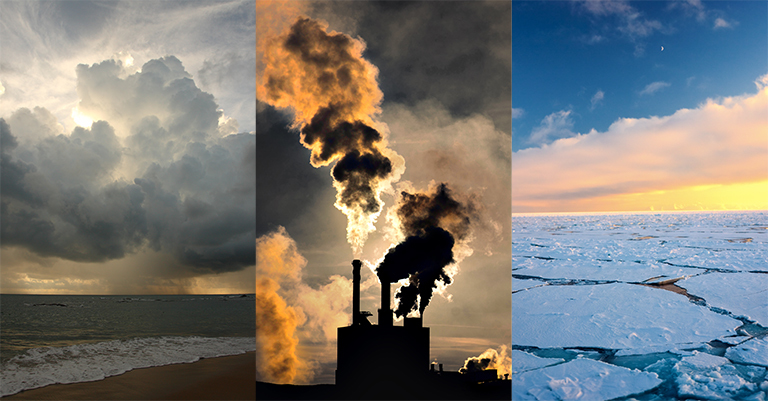
What’s in a name? Weather, global warming and climate change

For today's post, we are going to look at Earth's temperature. If you haven't seen my last post, 'The Three R's' check it out! If you don't know, I have started my new science badge, Environmental Science. I've chosen to post about this topic because we need people to know why our temperature is changing and we need to stop it. This is why our temperature is changing.

One of the reasons Earth's temperature is increasing is because of Pollution. I've made a blog post about Air Pollution and what it does. Here's a preview of the blog post.

You have heard of the word 'Pollution', but do you know what is air pollution. Well, the word 'Pollution' means, effects that harm our environment. Air Pollution means Pollution in the air. Air Pollution is one of the reasons our climate is changing.

Read more...


Carbon Dioxide's Affect


Carbon Dioxide (CO2) is a colourless gas. Carbon Dioxide is released by natural processes like volcano eruptions, human activities like deforestation, burning fossil fuels. Humans have increased have CO2 in the atmosphere by more than a third since Industrial Revolution began. The latest measurement of Carbon Dioxide is 409 ppm (parts per million) in September 2018 (last month). As you see the image below the Carbon Dioxide has increased since the 1950 level.

This graph, based on the comparison of atmospheric samples contained in ice cores and more recent direct  measurements, provides evidence that atmospheric CO2 has increased  since the Industrial Revolution.  (Source: [[LINK||http://www.ncdc.noaa.gov/paleo/icecore/||NOAA]])
Here is an image about the Carbon Dioxide increasing since 1950.
Credit: https://climate.nasa.gov/evidence/
Image about Carbon Dioxide increasing - From 2015 to present
Credit: https://climate.nasa.gov/vital-signs/carbon-dioxide/


How Many Degrees has it Increased?

After learning about Carbon Dioxide and what it does to Earth, let's know how hot is Earth? According to Goddard Institute for Space Studies (GISS), on average, every year, Earth has increased 0.8° since 1880. The warmest year on record is 2016. On the right is an image which shows you the temperature anomaly (long-term average). Below the image, there is a video about the global temperature anomalies it's from 1880-2017. This video is from NASA Climate Change.


As you see in the video, the Carbon Dioxide has mostly increased in the Northern Hemisphere. Temperature has also increased in cold places like Antarctica and Greenland. Below are two videos of ice loss in the Antarctic and Greenland.


Here is a video from NASA Climate Change about Greenland's ice sheet and how it is changing. There are missions studying Greenland: Operation IceBridge, GRACE (Gravity Recovery and Climate Experiment), ICESat 2 (future) and Oceans Melting Greenland (OMG).


What I've Learnt


  • Carbon Dioxide (CO2) is a colourless gas.
  • Carbon Dioxide is released by natural processes like volcano eruptions, human activities like deforestation, burning fossil fuels.
  • Humans have increased have CO2 in the atmosphere by more than a third since Industrial Revolution began.
  • The carbon dioxide last month was 409 ppm. 
  • ppm means 'Parts per million'.
  • The carbon dioxide has increased so much from 1950.
  • Earth has increased by 0.8° since 1880.
  • The warmest year on record is 2016.
  • Carbon Dioxide has increased so much in the Northern Hemisphere.
  • Every year the average mass of loss is 125 gigaton/year in Antarctica.
  • Every year the average mass of loss is 281 gigaton/year in Greenland.


I hope you like my post about 'Why is Earth's Temperature Increasing?'. Comment down below if you've learnt something new. Have a cool day!! Bye!!

Saturday, October 20, 2018

How much do you know?

For today's post, I have a survey about my recent post, Air Pollution. I've also made another survey about Pollution. We want to find out the first 10 people who finish the survey. The first survey is about Pollution.


After clicking 'Submit' you go on the next survey.


What I've Learnt


  • How to embed a Google Form.

I hope you like my post about the survey. Comment down below if you've participated in the survey. Have a cool day!! Bye!!

Is it because of Air Pollution?

For today's post, we are going to look at Air Pollution. You have heard of the word 'Pollution', but do you know what is air pollution. Well, the word 'Pollution' means, effects that harm our environment. Air Pollution means Pollution in the air. Air Pollution is one of the reasons our climate is changing.


Long-Term Effects


My drawing about Air Pollution

There are long-term effects of air pollution like heart diseases, lung cancer, diseases like emphysema, also it can damage your liver, brain, nerves, or kidneys. These effects have a major effect on children that can have medical conditions in the elderly. Air pollution not only affects humans, but they can also affect animals, forests, crops, and bodies of water. Did you know: Indoor Pollution kills 4.3 million people each year.

Indoor Pollution


Image result for indoor pollutionIndoor pollution is pollution inside your house. Weird, right! Pollution in your house? How can that be? Well, this is true, if you burn coal, wood, kerosene etc. in your house that is called Indoor Pollution. If you burn these resources in your house then it's best to take it away from your house. It might lead to long-term or short-term effects of pollution.


Ways of Pollution in our Atmosphere


A small clip - pollution entering the atmosphere
There are different ways of air pollution coming to our atmosphere. Most of the air pollution is coming from humans like, burning fossil fuels (petrol, gas, coal, natural gas also gasoline that produce electricity and to power our vehicles), factories, cigarette smoke. These are anthropogenic sources, means man-made sources. Pollution like ash from volcanoes, smoke from wildness is called natural sources.

8 Facts about Air Pollution


  1. 1/8 deaths worldwide is from Air Pollution.
  2. 92% of Earth's population lives in unhealthy air quality.
  3. Crops get damaged from Air Pollution.
  4. In traffic, Air Pollution increases its chance of a heart attack.
  5. Indoor Pollution is 2-5 times worse than air pollution.
  6. In many cities, people wear masks to save them from air pollution.
  7. Heavy crude oil increases the chance of air pollution than light crude oil.
  8. 80% of lung disease is caused by pollution from buses, cars, trucks and other vehicles.


What I've Learnt


  • There are long-term effects of air pollution like heart diseases, lung cancer, diseases like emphysema, also it can damage your liver, brain, nerves, or kidneys.
  • These effects have a major effect on children that can have medical conditions in the elderly. 
  • Air pollution not only affects humans, but they can also affect animals, forests, crops, and bodies of water.
  • Indoor Pollution kills 4.3 million people each year.
  • If you burn coal, wood, kerosene etc. in your house that is called Indoor Pollution.
  • If you burn these resources in your house then it's best to take it away from your house. 
  • It might lead to long-term or short-term effects of pollution.
  • Pollution like ash from volcanoes, smoke from wildness is called natural sources.
  • 1/8 deaths worldwide is from Air Pollution.
  • 92% of Earth's population lives in unhealthy air quality.
  • Crops get damaged from Air Pollution.
  • In traffic, Air Pollution increases its chance of a heart attack.
  • Indoor Pollution is 2-5 times worse than air pollution. 
  • In many cities, people wear masks to save them from air pollution.
  • Heavy crude oil increases the chance of air pollution than light crude oil.
  • 80% of lung disease is caused by pollution from buses, cars, trucks and other vehicles.

I hope you like my post about Air Pollution. Comment down below if you've learnt something new. Have a cool day!! Bye!!

Friday, October 19, 2018

The Three R's

Image result for the three r's
Image about the three r's
Credit: https://www.elementaryartsintegration.com/
For today's post, we are going to look at 'Reduce, Reuse and Recycle'. I've started my next science badge, Environmental Science. If you haven't seen my other badge posts, Psychology, Astronomy and Geology, then check it out. I've chosen to post about this topic is because people know how to keep our environment safe and tidy. Here is what the three R's mean.

First, it is Reduce. This means using fewer resources to make sure that in the future there are more resources. Like, we should use less plastic bags so they don't end up in the sea. We should use reusable bags that we can use that bag more than once.

Second, Reuse. Reuse means using the resource for more than one time, like reusable bags. Also, you can reuse by making resources out of something. One example is plastic, you can reuse plastic bags by making reusable bags, using plastic bags as your bin, making supply plastic cups, plastic detergent bottles into a watering can, etc.

Third, Recycle. We all have heard of the word 'Recycle', also we know what it means. Let's know how we can help recycle.


  • First of all, we should go out with our family or friends and collect rubbish [litter] from parks and gardens. 
  • We shouldn't litter.
  • Tell people not to litter (if they litter). 
  • Collect rubbish if it is not yours. 
We should know what to put in the recycle bin.

  • Paper
  • Cardboard
  • Junk Mail
  • Magazines
  • Plastic
  • Tin Cans
  • Aluminium
  • Polystyrene
  • Jars
  • Glass bottles
  • Lids

Let's recap why to Reduce, Reuse and Recycle is important.

We can save trees by recycling paper and not using paper that we don't need. We can use plastic that can help us and other people, we shouldn't recycle plastic bags. It's because we need these resources in the future so there would be more trees, paper etc. WE HAVE TO STOP DEFORESTATION!!

What I've learnt

  • You can make supply plastic cups, plastic detergent bottles into a watering can, etc. out of plastic.
I haven't learnt much because I had learnt information about 'Reduce, Reuse and Recycle'. I hope you like my post about 'The Three R's'. Comment down below if you have learnt something new. Have a cool day!! Bye!!