Pages

Monday, May 6, 2019

Filteration | Home Chemistry

For science today, we are looking about filtration. We had to make dirty water into clean water. I was in a group with Christian.

Aim: To make a filtration plant using household materials.

Image result for filtration science experiment
Water Filtration Plant

Four types of filters

  1. Pool
  2. Air
  3. Oil
  4. Kettle

What is Filtration:

According to Google Definition, filtration means - the action or process of filtering something.


Materials:

  1. Water bottle/containers
  2. Filter Paper - fold in half then into quarters
  3. Funnel
  4. Sand
  5. Pebbles
  6. Scissors
  7. Dirty Water


Process:

  1. Collect a bottle and cut it with scissors. 
  2. Fold the filter paper to make a cone. 
  3. Put the sand in the cone.
  4. Put the cone with sand to the pop bottle - top. 
  5. Put the pop bottle - top to the other cut out of the bottle.
  6. Put pebbles on top of the cone.
  7. Pour one cup of dirty water on top of the pebbles.
  8. Watch the dirty water turn into clear water.

Conclusion:


The water that flowed through the filter was;

The water was clear with a green tinge. The water flowed about 60 drops per minute. (1 drop = 1 second) There were bark, dirt, leaves and more other dirty things that stayed on top of the pebbles. Our water was almost clear. After 40 minutes, the water gradually slowed down and there were 40 drops per minute. After 1 hour, the drops slowly went to 9 drops per minute.

Climate Change - Our Biggest Challenge

For reading, we are reading about Climate Change. The teacher had set activities for us to know about climate change. After we've finished, we had to make an infographic or a DLO about the topic.

Definition:

According to Google Definition, climate change means - a change in global or regional climate patterns, in particular a change apparent from the mid to late 20th century onwards and attributed largely to the increased levels of atmospheric carbon dioxide produced by the use of fossil fuels.


Here's my infographic that I've made.


I hope you like my post about Climate Change. I hope you learnt something new from this infographic. Comment down below what you've learnt today about Climate Change. Have a cool day!! Bye!!

Saturday, May 4, 2019

White Powder | Home Chemistry

For science today, we are looking at white powder and some forensics. The scenario is, ' A bag of white powder has been confiscated by the airport customs. You need to find out what white powder it is?'. We need to find out what type of white powder it is.

There are some examples of everyday kitchen white powder.


  • Flour
  • Cornflour
  • Sugar
  • Salt
  • Baking Soda
  • Baking Power
  • Icing Sugar
  • Tartaric Acid
  • Citric Acid
  • Gluten Free Flour

Today, we will be using a small amount of four white powders in our cardboard that we have, which is sugar, baking soda, cornflour and salt.

Aim: To learn about the makeup of different white powders.

Materials:


  1. Pipette
  2. Vinegar
  3. Iodine
  4. Cardboard
  5. Sugar
  6. Baking Soda
  7. Salt
  8. Water

Steps:

  1. Get a black cardboard.
  2. Fold the cardboard into four sections - sugar, baking soda, cornflower and salt.
  3. Put the sugar, baking soda, cornflower and salt in the sections - one spoon each.
  4. Get some iodine. 
  5. Split the sugar, baking soda, cornflower and salt into thirds.
  6. Drop three drops of iodine into one-third of the four sections.
  7. With a pipette, drop three drops of vinegar from the pipette to the other one-third of the four sections.
  8. Lastly, with a pipette, drop three drops of water to the last one-third of the four sections.
  9. Watch the chemical reactions happen. Record and observe what happened.

Findings:


Sugar
Salt
Baking Soda
Cornflour
Appearance
WhiteWhiteWhiteWhite
Texture
MediumMediumMediumSmall
Smell
No smellNo smellNo smellNo smell
Iodine
Absorbed the sugar and dissolvedAbsorbed the salt and dissolvedHard like gel Some tipped off and hard like gel
Water
Absorbed the sugar and dissolvedNothing happensAbsorbed the water and dissolvedHard like gel
Vinegar
Absorbed the sugar and dissolvedNothing happensBubbles up and releases Carbon Dioxide (Co2)Hard like gel


Conclusion

Finding out the mystery powder.
The mystery white powder was Baking Soda. We knew that it was baking soda was that when we added Vinegar to the baking soda it bubbled up. When we added Iodine it made the iodine in the baking soda hard.

It was so weird that there was no smell in any of the powders. The sugar absorbed when we added the three items to the sugar - iodine, vinegar, water, it absorbed the sugar and dissolved the sugar.

For salt, when we added the iodine, it absorbed the salt. But when we added the water and vinegar, it stayed on top and nothing happened.

For baking soda, there were different behaviours when we added several things. When we added iodine it turned the baking soda hard like gel. The water absorbed the baking soda and dissolved. Of course, when we add vinegar to baking soda, it will make bubbles like in a volcano, we add vinegar in the baking soda in the volcano, then the bubbles come up, which releases Carbon Dioxide.

For cornflour, the iodine made it hard and one drop tipped off. When we added the vinegar and water it made it hard like the iodine.

I hope you like my post about White Powder. Comment down below if you've done an experiment like that. Have a cool day!! Bye!!


Friday, May 3, 2019

What have we done this week? | Drama

For drama, we had to blog about what we had done this week. This week, we have done four main things that I am going to share you today.

Food Pyramid

With Drama, we also have health, we focus health in drama. So in health, we had discussed about healthy food. Here is an example of a food pyramid.

Related image
Credit: https://sport.ucc.ie/wp-content/uploads/2014/11/pyramid-simple.png


Freeze and Spoken Thoughts

We had to say a phrase of some healthy food. Examples: Bananas for you. Eat a rainbow. Drink water every day. Eat healthy food. You are berry special. Orange you so sweet. and more...

I had said 'You are berry special'. Below is a video where we had said our phrases. Hope you like it.


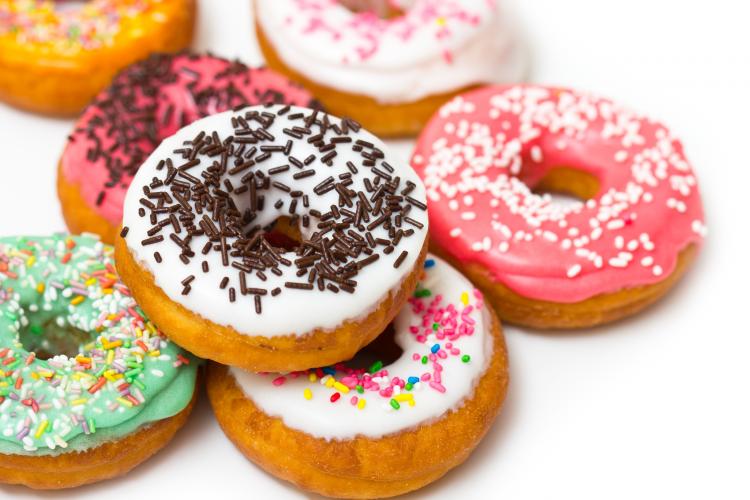
Holiday Donut

Image result for holiday donut
Credit: https://c.tadst.com/gfx/750w/national-doughnut-day.jpg
So we had a partner, and we had to say our name, what we had done in the holidays and what did you feel. We had rotated and talked to many other people. 

I hope you like my reflection of what I had done this week for Drama/Health. Comment down below if you've done one activity that I've said. Have a cool day!! Bye!!

Student Summit 2019

Last term, we had a student summit that some students in Hornby High School went to. The summit was in South Hornby School. I was in part of the Uru Manuka Media Team. The Hornby High Media Team have made a video of our experience in the Student Summit. I hope you like it!!


Octopuses, Fishes and Mermaids

Today for DMIC maths, we had to answer another question. It was about Octopuses, Fishes and Mermaids in a rock pool. There were 38 arms, 24 eyes and 8 tails. We needed to find how many mermaids there were. Here’s how we found out!


I hope you like how we found out the question. Have a cool day!! Bye!!

Wednesday, May 1, 2019

Want to know about me? | Media Team

Our first task in Media Team was to create a video about ourselves. First, we had to record from Screencastify. We had to make a video which is about 1-minute or less. Next, we had to edit in Wevideo. Here is my video that I've recorded. I hope you like it.


I hope you like my post about myself. Have a cool day!! Bye!!